In the demanding world of contemporary serious sliding, podium finishes is no longer exclusively a function of brute torque or driver courage. Conversely, it has become a intricate engineering challenge which demands a painstaking blend of selecting a inherently capable car, equipping it with the most precise drift-spec components, and, most essentially, understanding its live behavior on the circuit through cutting-edge drift telemetry software. This comprehensive handbook functions as your master plan from the initial concept of a project car through to the last data-informed adjustments that transform a capable car into a predictable champion. We will examine in detail the precise engineering of chassis dynamics adjustment, showing how a advanced suspension tuning tool like GripDial eliminates guesswork and provides unparalleled insight into your vehicle's true performance.
The foundation of any great drift car is, indisputably, the base vehicle itself. Several vehicles have earned iconic reputation within the worldwide drifting scene due to their natural weight distribution, robust construction, and the vast availability of specialist parts available. Choosing the right platform is the primary and most important choice a enthusiast will make. For instance, the BMW E36 is widely regarded as perhaps the the finest overall drift cars of the modern era. Its excellent balanced front-to-rear weight, combined with a RWD layout and robust straight-six engines, forms a platform that is both easy to handle for novices and highly effective in the control of a professional competitor. The successor of this lineage, the BMW E46 platform, improves on these qualities with a increasingly refined frame, wider stance for improved stability, and yet a greater degree of steering angle as standard from the manufacturer. A distinct powerful option in the pro scene is the C6 generation Corvette.
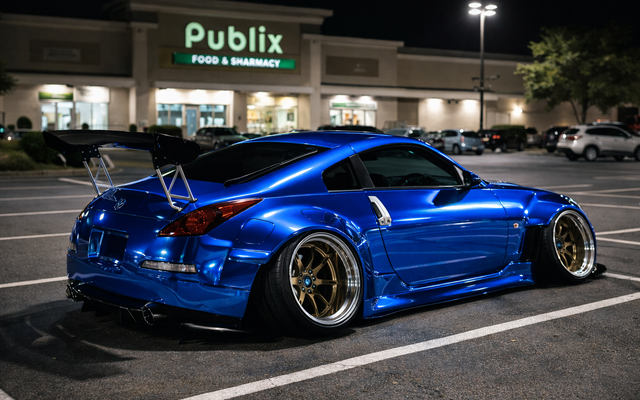
This American performance car brings a distinctive combination of benefits to the sideways discipline, featuring a lightweight alloy chassis, a backwards-positioned transaxle that aids in an excellent front-to-rear mass ratio, and the tremendous thrust of a large-displacement LS V8 motor. This fusion renders it an complete weapon on track, able of entering and maintaining extended angles with seemingly easy deployment of throttle. For builders desiring remarkable value, the 350Z model Nissan excels as a prime example. It arrives from the factory with a robust platform, a competent original locking differential, and the free-revving VQ series engine that delivers sufficient horsepower and torque for learning and moving up in the discipline. Its newer version, the Nissan Z34, presents further improvements in chassis stiffness, handling precision, and outright motor output, establishing its position as a common pick among professional pilots. Other legendary platforms that deserve consideration encompass the nimble Wankel-engined FC generation RX-7, the most popular Nissan S13, the American Ford SN95, the electronic-equipped BMW E90, and the compact yet unbelievably playful and forgiving Mazda MX-5. All of these chassis provides a different palette of characteristics, difficulties, and capabilities, but they all share the fundamental ingredients necessary to become a competitive drift car.
However, selecting the optimal platform is just the starting point. To release the full capability of any of these cars, significant modifications to the steering and suspension systems are completely non-negotiable. This is where the domain of precision aftermarket hardware becomes critical focus. The single most impactful upgrade for a dedicated competition vehicle is the integration of a maximum-angle steering angle kit. These advanced kits, such as those developed by performance brands like SLR, are created to radically expand the vehicle's maximum steering angle. A factory street car is severely limited in how far its tires can rotate, a design limitation for on-road use. In oversteer driving, but, extreme countersteering is frequently necessary to manage and hold a slide. An modification kit substitutes the factory uprights, rod ends, and potentially A-arms with parts that allow the steered wheels to achieve angles beyond 70 or even 80 degrees, compared to a normal factory angle of around 40 to 50 degs.
This immensely increased capability offers the driver with dramatically more authority during a angle, making it much more straightforward to begin a drift, sustain it through a extended corner, and change smoothly from one angle to the other. The improvement in handling is nothing short of transformative. Paired with a appropriately selected steering kit is the every bit as vital upgrade to the car's suspension. Generic or even premium sport coilovers are just not designed for the specific and extreme demands of sliding. A purpose-built system of adjustable dampers is of utmost importance. These specialized dampers have custom damping rates and spring stiffness that are designed for the extreme load shifting that is inherent of drifting. When a pilot begins a drift, the car's weight is shifted forcefully to the outside of the bend. Proper performance coilovers manage this transfer in a predictable manner, permitting the chassis to settle quickly and giving the driver precise feel through the controls and seat. They furthermore provide accurate tuning of ground clearance, shock absorber firmness, and cross-weight, which are all key aspects of dialing in the vehicle's handling to a particular venue or competition style. In combination, a precision-engineered angle modification system and a expertly chosen pair of drift-spec coilovers form the core hardware base upon which all later tuning is built.
Once the essential parts is in place, the next critical phase in the development is the detailed tuning of the vehicle's alignment. This is the realm of vehicle alignment optimization, a process that can feel overwhelmingly complex to the newcomer but is, in reality, the defining factor to converting a collection of capable components into a cohesive and controllable vehicle. The most discussed parameter of suspension geometry for oversteer is certainly camber. Wheel camber is the angle of the rim in relation to the vertical plane when viewed from the forward of the vehicle. If the top edge of the tire is leaning inward, this is known as camber-in. In sliding, negative camber on the front axle wheels is generally employed and is seen as necessary. The reason is intrinsically linked to vehicle dynamics.
When a chassis is cornering at limit angles, the chassis tilts toward the outer of the turn. This chassis roll forces the outside steering tire to diminish its optimal grip area with the tarmac. By adding negative camber, the tire is pre-angled to account for this roll. As the vehicle tilts into the corner, the tire gains a better contact patch against the track, optimizing its bite at the precise time when it is absolutely essential for control. Usually, front axle adjustments for a dedicated drift car vary from approximately -3 degrees to as high as -5 degrees or even beyond, depending on the specifics of the car configuration, compound selection, and operator preference. The rear axle wheels also employ negative camber, but the angles are usually less and more nuanced than the front. Too much camber at the back can result in the chassis overly loose and difficult to manage on throttle use, as it diminishes the usable grip area of the driven tires during linear acceleration. Therefore, rear camber coilover setup tips settings are frequently in the vicinity of -1 degree to -3 degrees, achieving a delicate balance between offering adequate side bite to assist in starting and maintaining the slide while also preserving effective traction for acceleration the corner. alignment is only one element of the larger alignment puzzle, which furthermore encompasses toe angle, caster angle, and bump steer modification.
Toe angle refers to the angle of the tires as seen from the top. Inward toe means the front edges of the tires are closer together than the car alignment tuning rear edges, while toe-out means the converse. For oversteer, a slight amount of front negative toe is commonly employed to sharpen the initial response directional reaction, making the car feel more nimble and eager to initiate a oversteer moment. Rear axle toe setting is typically set to neutral or a incredibly minute amount of inward toe to promote straight-line stability under throttle. caster angle is the forward or aft angle of the steering axis when viewed from the lateral of the car. Positive positive caster increases steering feel and high-velocity solidity, and it also boosts camber increase during steering, which is highly beneficial. Tuning these parameters is a complex interaction where a modification to one value can and will impact the remaining parameters. The conventional approach for tuning a vehicle's alignment for sliding has historically been a tedious endeavor of trial and error. A pilot or team would apply a change based on intuition, drive the car on track, use the pilot's individual feel and comments, and then make a further adjustment. This loop would iterate time after time until the vehicle felt "good" or the allotted practice time was exhausted. This system is not only extremely wasteful in terms of time and tires, fuel, and parts, but it is additionally deeply imprecise.
Driver feel is a notoriously inconsistent data source, colored by numerous elements such as tiredness, evolving track grip levels, temperature, and simply the mindset of the operator on that given day. What feels "loose" on one run might feel "understeery" on the subsequent pass, leading to confusing information and ineffective changes. This traditional limitation in car suspension tuning is precisely where contemporary engineering tools has intervened to transform the landscape.
The development and application of advanced vehicle dynamics tools has brought about a completely new age for engineering and refining high-performance drift machines. This new generation of tools, represented by groundbreaking solutions like modern telemetry hardware, operate by physically measuring the real-time physical behavior of the chassis as it is piloted on the course. As opposed to depending on personal impression, these tools gather measurable metrics on essential variables such as shock absorber movement, individual tire rotation, G-force loading, steering angle, and throttle and brake input. This acquired information flow is then analyzed by powerful applications that can graph and analyze the information in a actionable way. For the very first time, tuners and builders can observe exactly what the chassis is performing at every point of a slide. This capability transforms the whole alignment optimization process. Imagine the particular challenge of optimizing the front negative camber for a specific car. As an alternative to making a modification from -3 degrees to -3.5 degrees and then testing multiple passes to try and "feel" a change, a suspension tuning tool can give instant and irrefutable information. The application can display visually how the suspension's contact patch is acting during the key moments of a slide: the initial flick, sustain, and transition. It can show if the current angle is allowing the loaded tire to achieve maximum grip or if the compound is over-stressed on its external edge.
The software can then make empirical suggestions for modification. Perhaps the information shows that the outside front tire is even stressing its sidewall at -3.5 degrees of camber, indicating that a move towards negative camber, say -4 degrees, might be advantageous. Alternatively, the data might indicate that the tread is failing to coming up to optimal operating temp or that the inside shoulder is wearing too quickly, which could point to that there is too much inward lean and a modest lessening back to -3.2 degrees would be more ideal. This degree of granularity and actionable intelligence was literally impossible in the time of pure manual adjustment.
The impact of utilizing a advanced drift telemetry system reaches far beyond merely dialing in camber angles. It serves as an essential damper adjustment manual that is tailored to your exact car. When fine-tuning the rebound and compression values on your adjustable dampers, rather than using general guidelines or replicating another car's numbers, you can employ the software to analyze how the chassis is behaving in response to your adjustments. The application can graph the suspension travel trace over a lap, revealing if the coilovers are handling the chassis motion optimally or if they are causing the vehicle to become unsettled uncontrollably after a flick. It can assist in identifying problems like hitting the bump stops or losing droop, enabling you to make informed adjustments to helper springs, rebound/compression settings, or ride height. This process extends similarly to the intricate process of car alignment tuning. Beyond camber angle, the tool can give insight into how modifications to toe settings and caster are affecting the chassis's handling during various maneuvers of a lap. For instance, it can help you to determine the best amount of front toe-out for your individual steering rack geometry and piloting technique by analyzing the speed of initial reaction and the predictability of the vehicle at maximum lock. This makes the system an exceptionally useful performance optimization handbook that is actively informed by the actual dynamics of your specific vehicle on the track. It elevates the complete process from a dark art into a repeatable development process.
Furthermore, the utility of a tool like modern telemetry is not confined to expert teams with extensive resources. For the grassroots competitor, it serves as an incredible force multiplier. It effectively offers the driver with the insight of a professional race engineer without needing the typical overhead. It speeds up the learning curve by giving clear answers to challenges that would traditionally take countless track days of experimentation to solve. A builder can learn how their specific vehicle reacts to different settings, developing a more profound understanding of suspension theory in the endeavor. It also democratizes advanced chassis dynamics techniques, enabling anyone with the desire to perfect their vehicle to do so in a structured and productive manner. This is notably significant in a discipline like oversteer competition, where engineering expertise has historically been a highly secretive commodity among elite teams. Today, that capability can be in the toolkit of every dedicated driver.
In the final analysis, the journey to engineering and dialing car suspension tuning in the ideal competitive drift machine is a comprehensive mission that seamlessly blends time-honored engineering principles with cutting-edge data technology. It starts with the informed pick of a proven chassis, then enhanced by the integration of non-negotiable performance hardware like drift-spec angle modification systems and properly specified competition suspension units. The build then advances into the detailed stage of alignment optimization, where settings like negative camber, toe, and caster angle are meticulously adjusted to match the vehicle's new capabilities and the operator's specific needs. The final step, and what truly distinguishes the today's approach from the past, is the adoption of a advanced suspension tuning application. This system eradicates the approximation and waste of solely subjective tuning by giving quantifiable, real-time information on how the car is actually performing. It functions as an unparalleled diagnostic aid, a comprehensive alignment optimization handbook, and a comprehensive performance analyzer. Together, this holistic methodology leads to that each and every aspect of the competition vehicle—from the choice of the car to the last click on the coilover—is optimized for peak performance on the competition venue. It signifies the full progression of the discipline of oversteer driving, merging physical pilot talent with surgical suspension engineering to build the most dominant machines imaginable.